Streets for All
Streets for All focuses on spreading public education messages about street safety to residents of all ages.
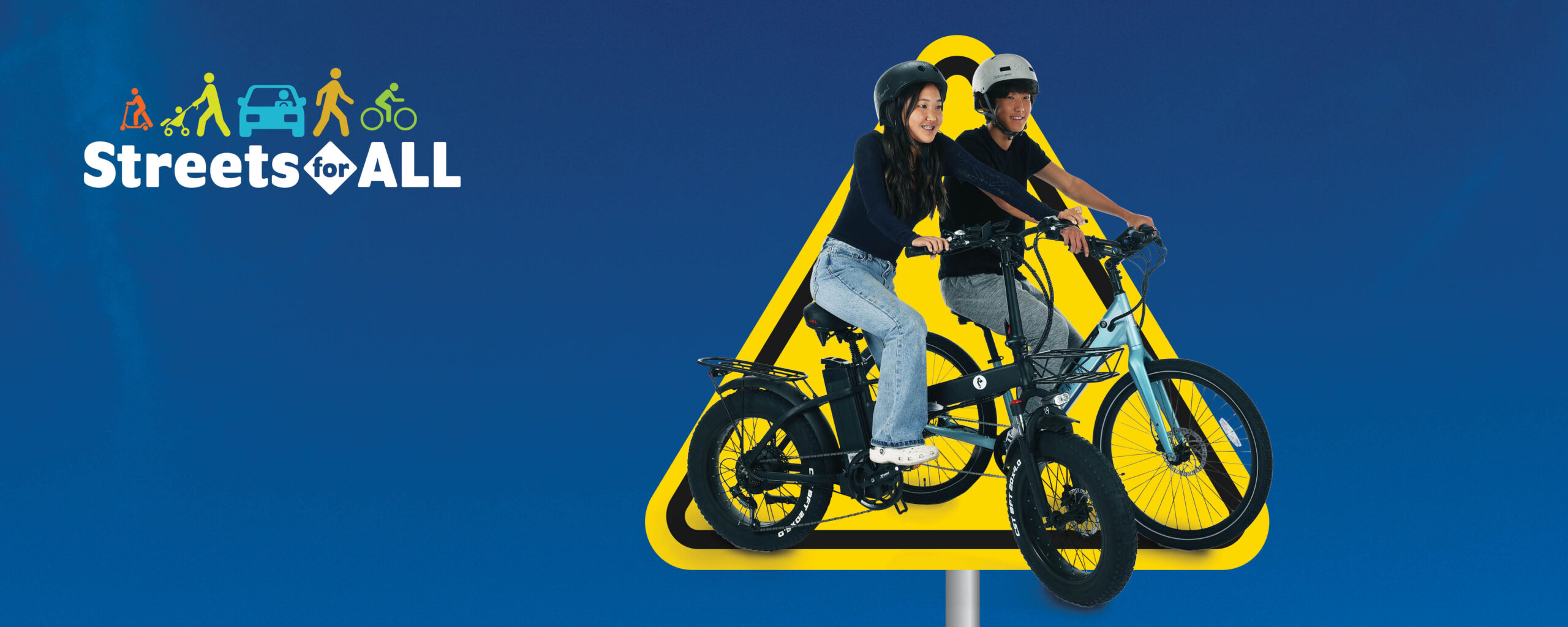
New! School Crossing Guard Program Update in Redondo Beach for the 2026-27 School Year
The City of Redondo Beach and the Redondo Beach Unified School District are implementing changes to the School Crossing Guard Program to ensure long‑term sustainability, consistent staffing and enhanced student safety. These changes follow a comprehensive review conducted by the School Crossing Guard Subcommittee and presented to the City Council on May 5, 2025.
Why is the Crossing Guard Program changing?
The City has been experiencing significant and unsustainable staffing challenges, including high call‑out rates and difficulty maintaining consistent coverage at all intersections. A detailed review showed that the current program model cannot be reliably staffed to meet community expectations. Updating the program ensures a more sustainable, equitable and data‑driven approach moving forward.
What are the changes to the Crossing Guard Program?
- Crossing guards will be assigned to locations identified through the City’s safety evaluation. (See crossing guard locations below.)
- Some crossing guard locations have been relocated or removed.
What traffic calming and safety measures are now in effect?
- The City has implemented traffic calming and safety measures, such as signage, visibility improvements or engineering solutions, at any intersection where a guard is relocated or removed.
- Several intersections near schools now feature painted curb extensions in school colors. School mascot stencils will also be painted inside the colored areas, similar to a street mural. The painted curb extensions visually narrow the intersection, reinforce the daylighting area near the crosswalk and encourage drivers to make slower, more controlled turns rather than cutting quickly across the corner. They are not travel lanes, bike lanes or new traffic-control signals. The goal is to discourage drivers from making fast, shallow turns close to the curb. Those turns can reduce the amount of time a driver has to see pedestrians, cross traffic or other vehicles. A slower, sharper and more controlled turn increases visibility and reduces the area where the paths of vehicles and pedestrians overlap. Drivers should keep these areas clear, as painted curb extensions are not parking or stopping zones. California law also prohibits parking on crosswalks or within 20 feet before any crosswalk.
- Raised centerline elements are also in place. They discourage drivers from cutting diagonally through the intersection, entering the opposing traffic lane or making a fast turn across the centerline. Drivers making a slower, properly positioned turn into the correct lane should be able to navigate the intersection without driving over them.
- Speed bumps have also been installed to slow vehicle speeds.
- Following these rules helps maintain safe sight lines and safer crossings for students. Drivers should continue obeying the existing stop signs, crosswalks, lane markings, speed limits and requirement to yield to pedestrians.
- The City may consider adding flexible posts or bollards within some of the painted areas to provide a more visible physical boundary. Any addition must also account for maintenance, damage, visibility, emergency access and street sweeping. The City will continue to monitor traffic conditions and make adjustments as needed.
- These improvements cannot, by themselves, prevent distracted driving, speeding, rolling through stop signs or other illegal behavior. Education, enforcement, attentive driving and continued evaluation remain important.
Where are the crossing guard locations?
School-Based Locations with Crossing Guards (10)
- Julia & Knob Hill (Alta Vista)
- Beryl & Maria (Beryl Heights)
- Grant & Green (Birney)
- Flagler & Havemeyer (Jefferson)
- Rindge & Plant (Lincoln)
- Mackay & Nelson (Madison)
- Emerald & Lucia (Parras)
- Prospect & Helberta (Tulita)
- Ripley & Felton (Washington & Adams)
- Ripley & Lilienthal (Washington & Adams)
At Large Locations with Crossing Guards (8)
- Inglewood & 182nd
- Grant & Felton
- Inglewood & Ralston
- Prospect & Camino Real
- Grant & Aviation
- Ford & Aviation
- Artesia & Bike Path
- Palos Verdes Blvd & Helberta
For more information, visit the City of Redondo Beach website and the Redondo Beach Unified School District website.
Streets for All
We all share the responsibility to make Beach Cities streets safe for everyone, including pedestrians and bicyclists. Safe places to walk and bike are important for supporting active, vibrant communities. In backing this effort, Beach Cities Health District launched a safety campaign to educate the community on how they can create “Streets for All”: bicyclists, pedestrians, drivers, strollers, people with disabilities and skateboarders.
Streets for All focuses on spreading public education messages about street safety to residents of all ages and spotlighting the need for increased safety measures along highly-trafficked corridors like Prospect Avenue — which cuts through six school zones and impacts more than 5,500 Redondo Beach students on a daily basis.
For more information on ways Beach Cities Health District is creating a livable beach community, view the Streets for All resource guide, the Streets for All educational series summary report or visit bchd.org/blue-zones-project/healthy-communities.
Key Campaign Themes
- Increase street safety education efforts.
- Advocate for infrastructure to enhance safety and livability.
- Share resources and best practices.
- Partner and collaborate with local organizations.
- Promote “Streets for All” and sharing the road for all users
Why it Matters
There are various transportation methods used within the Beach Cities communities which are utilized by a wide array of age groups and so we want to ensure our streets are safe for everyone.
A livable community is one that provides safe and convenient transportation choices to all, whether it’s by walking, bicycling, transit, or driving. Understanding how to responsibly share the road is crucial for injury prevention, decision-making, and safety-planning.
E-Bike Safety and Education
E-bike (electric bikes) have become a common form of transportation in the Beach Cities, especially with young people. Understandably, this growing popularity has come with concerns over safety, education, and general guidance for riding.
To fill in the gaps in e-bike education, BCHD has partnered with the local cities, schools and community organizations, surveyed our local middle and high schools, and developed a webpage with safety education and resources. Below you will find bicycle, pedestrian, and driver safety tips; but make sure to visit our e-bike page for detailed information and tips here.
Bicycle Safety Tips
When riding your bike and e-bikes, be sure to follow these bicycle safety tips.
- Same Road, Same Rules – Motorists and bicyclists are granted the same rights and responsibilities on public streets. Both must obey the laws and the rules of the road.
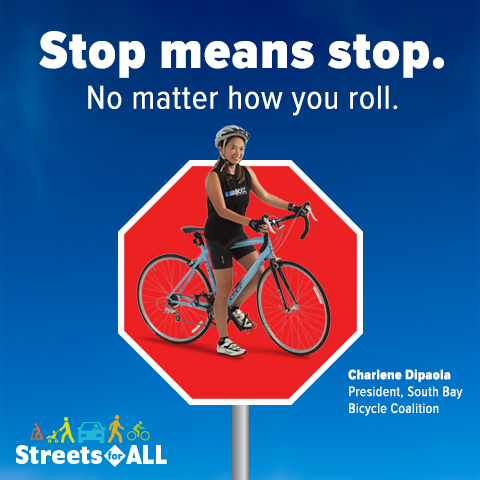
- Stop Means Stop – Bicyclists must come to a complete stop at any stop sign or stoplight, and yield to those who arrive first.
- Always Wear a Helmet – Helmets reduce your risk of injury. State law requires children under 18 to wear a helmet when riding any kind of bicycle, scooter or skateboard, including those that are electric powered.
- Ride in the Direction of Traffic – Always ride in the direction of traffic and leave space between you and cars for braking. If there isn’t a dedicated bike lane, ride in the center of the driving lane rather than the right-hand side of the lane.
- Extra Caution with E-Bikes and E-Scooters – Get used to the stronger acceleration and braking before going on major roads. Give yourself and others around you more reaction time and space.
- Make Yourself Seen – Always use arm signals to indicate your next move. Use a bell if cars, pedestrians, or other bicyclists don’t notice you. A bike light, bright colors and reflective materials help increase visibility, especially at night.
Pedestrian Safety
- Cross at the corner and use crosswalks when available.
- Even if you have the right of way, look both ways. Make eye contact to be sure drivers see you. Don’t assume drivers will stop.
- If you have young children, teach and reinforce safe walking.
- When wearing earphones, keep volume low enough to still be able to hear traffic or indications of danger, or wear just one earpiece.
- Stand clear of hedges, buses, parked cars or other objects that could make it difficult for drivers to see you.
- Wait for the walk signal before crossing. Don’t enter the crosswalk if the hand is flashing or solid red.
- Wear something bright or reflective when it is dark. Cross the street in a well-lit area if possible.
- On trails/paths used by people biking, look behind you before making sudden turns.
- When hiking, always let someone know your route, destination and expected return time.
- At mid-block crossings, even if one car stops at a crosswalk, do not assume other motorists can see you and will stop for you.
Driver Safety
The following driver safety tips are from the California Vehicle Code.
- Slow down. Drive the speed limit or less. Be alert for people walking, bicycling, skateboarding or in wheelchairs (CVC 21954(b)).
- Every intersection is a crosswalk, even if unmarked. Always stop for people crossing the street (CVC 21950).
- Give people biking at least three3 feet when passing. Do not pass unless safe to do so (CVC 21760).
- When parallel parking, look in the side view mirror and over your shoulder for people biking or other vehicles before opening the door. Only open door when safe to do so (CVC 22517).
- Look twice for people walking or biking before you make a turn. Always come to a complete stop before turning right on red (CVC 21453).
- If another car is stopped at a crosswalk, you should stop too. There may be someone crossing the street that you can’t see (CVC 21950).
- Be alert. Put your cell phone away. Keep your eyes on the road and watch for other roadway users, including people walking and biking (CVC 23123.5).
- Only enter a bike lane to park where permitted, to leave the roadway or to prepare to enter an intersection (CVC 21209).
Community Involvement
Share on Social Media
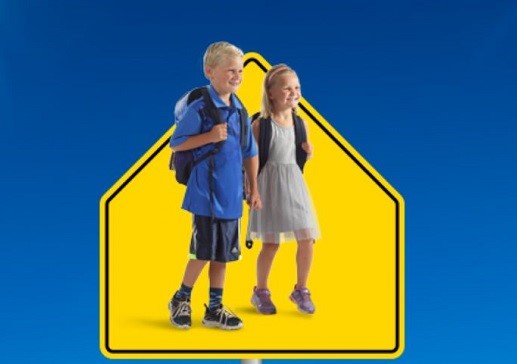
How do you create Streets for All? Share an image of how you roll with the hashtag #StreetsForAll and tag us on Facebook, Twitter and Instagram.
Volunteer
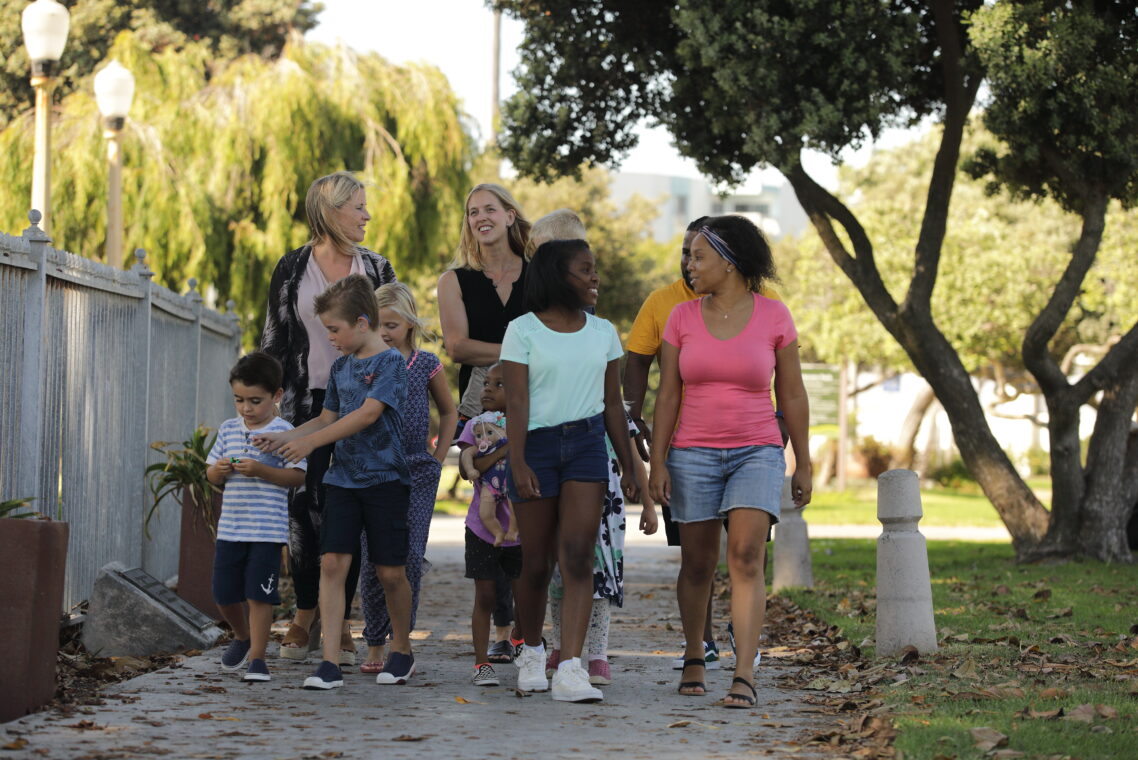
Volunteer to promote safe Streets For All with programs including the Walking School Bus and local bike corrals.
Go Human
Streets for All is the local interpretation of a regional effort by the Southern California Association of Governments. The “Go Human” campaign e…
Download Streets for All Campaign Materials:
Streets for All Partners
- City of Hermosa Beach
- City of Manhattan Beach
- City of Redondo Beach
- Redondo Beach Unified School District
- Hermosa Beach City School District
- Beach Cities Health District
- Beach Cities Cycling Club
- South Bay Bicycle Coalition Plus
- Southern California Association of Governments
Additional Street Safety Resources
- AARP — Livability
- Smart Growth America — National Complete Streets Coalition
- Los Angeles County Model Design Manual for Living Streets
- Vision Zero Network
You May Also Like

Stay Connected
Sign up to get interesting news and updates delivered to your inbox.