

When Sonia Georgy emigrated from Egypt to the United States 48 years ago with her young son and husband, she never imagined that volunteering would one day become an important part of her health and happiness. After experiencing loss and loneliness later in life, she discovered that giving back could also be a powerful way to build connection and find purpose.
The Georgy family settled in Culver City, where Sonia built a career in banking while her husband worked as an electrician for the railroad. Their daughter soon joined the family. Today, Sonia beams when she talks about her children and four grandchildren, ages 8 to 19. “They are the joy of my life!”
After their children left home, Sonia and her husband moved to a 55+ community in Redondo Beach, hoping to simplify their lives as his health began to decline. Her husband had always believed strongly in giving back, volunteering more than 2,500 hours at the Culver City Senior Center and later at Beach Cities Health District’s (BCHD) Center for Health and Fitness.
His commitment to service left a lasting impression on Sonia. After he passed away in 2022, she joined BCHD as a Campus Greeter. At a time when she was grieving, volunteering offered Sonia a way to stay connected, honor her husband’s memory and bring a little more connection into her own life.
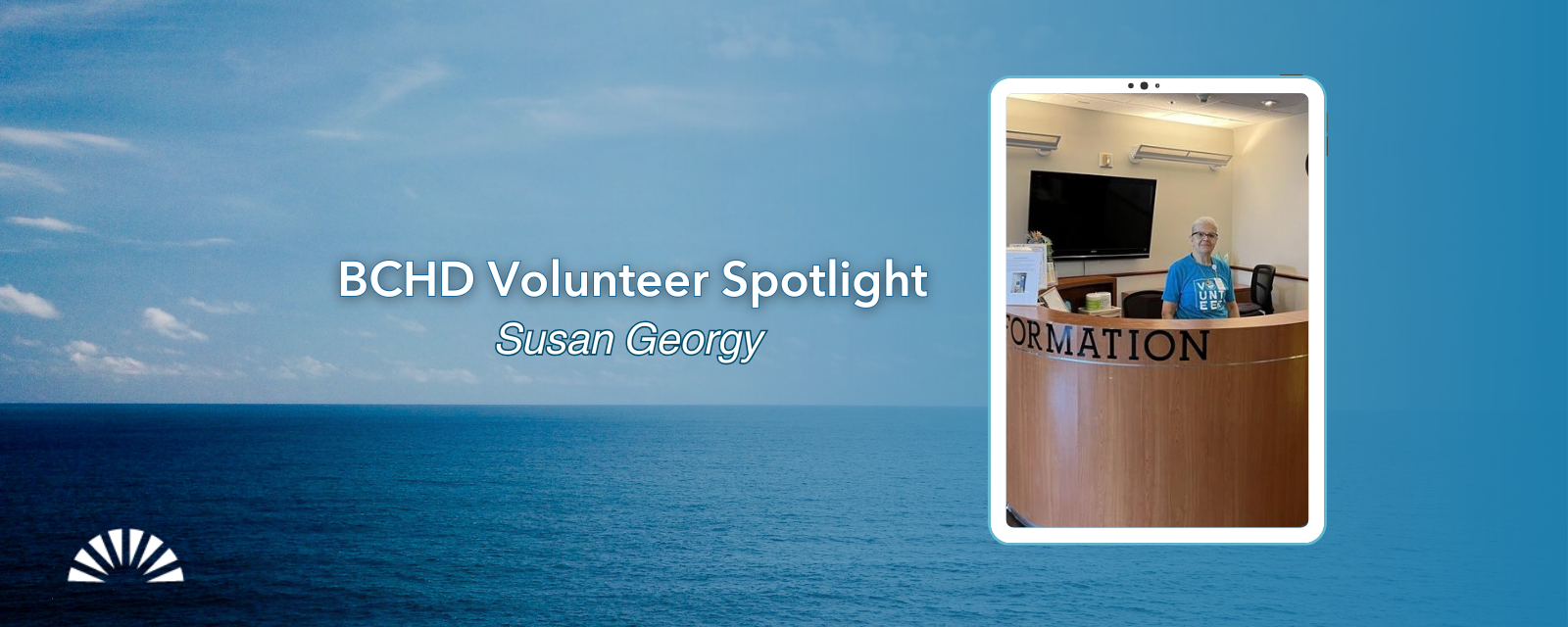
Today, Sonia welcomes visitors at the lobby desk in the 514 Building, greeting staff and guests as they enter and helping them find their way. But her role goes beyond providing directions. With warmth and empathy, she encourages people to feel comfortable sharing what is on their minds, believing that talking with someone can help “lighten their load.” Over time, her weekly shifts have also given Sonia something of her own: a network of friends she looks forward to seeing each week.
“She has a natural way of making people feel comfortable and welcomed, and her kindness shines through in every interaction,” says Cindy Carcamo, Sonia’s volunteer supervisor. “Sonia brings a sweet and genuine energy to her role as a Campus Greeter.” Cindy adds that Sonia’s years of service reflect “the care she has for the people around her and the community she has helped build here.”
Sonia carries that same spirit of connection into her life outside BCHD. She enjoys getting her steps in at the beach or around her apartment complex, often inviting neighbors to join her. She also volunteers with the Red Cross, helping make blood donors feel welcomed and cared for.
For Sonia, volunteering is ultimately about something simple but powerful: showing up for others. Her advice to anyone considering volunteering is equally straightforward: “Show you care. Make time to share with other people and make a difference.”
Sonia has found that connection can take many forms: a smile at the lobby desk, a conversation that lightens someone’s load, a walk with a neighbor or a helping hand at a blood drive. In giving her time to others, she has found a meaningful way to keep her husband’s spirit of service alive while continuing to strengthen her own sense of belonging.